
This article contains affiliate links. As an Amazon Associate we may earn from qualifying purchases, at no extra cost to you.
If you’ve been thinking about trying Audible, you’re not alone.
Audiobooks have become increasingly popular over the last decade, helping millions of readers enjoy books while commuting, exercising, traveling, or simply relaxing at home. As one of the largest audiobook platforms in the world, Audible offers access to thousands of titles across thriller, romance, mystery, fantasy, nonfiction, and more.
But is Audible actually worth paying for in 2026?
The answer depends largely on how you read, how often you finish books, and whether audiobooks fit naturally into your lifestyle.
For some readers, Audible can dramatically increase the number of books they enjoy each year, and how they best absorb books. For others, a subscription may not make sense at all.
In this guide, we’ll break down how Audible works, who it’s best for, the pros and cons, membership options, and whether it’s a worthwhile investment for today’s readers.
Last updated: June 2026
🎧 Thinking about trying Audible?
Try Audible Now (New Member Deals Available)
Free trials are often available to see whether audiobooks fit your reading habits before committing to a membership.
What Is Audible?
Audible is Amazon’s audiobook platform, giving members access to a vast catalog of audiobooks, podcasts, Audible Originals, and exclusive audio content.
Unlike traditional reading, Audible allows you to listen to books almost anywhere. Whether you’re driving to work, walking the dog, exercising at the gym, or doing chores around the house, you can continue making progress through a book without needing to sit down and read.
The service is available through the Audible app, which works across smartphones, tablets, computers, and other compatible devices.
One of Audible’s biggest strengths is convenience. Many readers struggle to find enough uninterrupted time to read. Audiobooks help solve that problem by turning otherwise unproductive moments into reading opportunities.
How Audible Works – Explained
At its core, Audible is relatively simple.
Members receive access to various audiobook benefits depending on their plan. Some memberships include audiobook credits , which can be redeemed for audiobooks of your choice, while others provide access to a library of included content.
Once you’ve added an audiobook to your library, you can listen on-demand through the Audible app.
Popular features include:
- Offline listening
- Adjustable playback speed
- Sleep timers
- Bookmarks and notes
- Cross-device syncing
- Professional narration
Many listeners find themselves consuming significantly more books each year simply because they can listen while doing other activities.
Audible Account vs Membership: What New Users Often Get Wrong
One of the most common misconceptions about Audible is that your account and your membership are the same thing.
They’re actually separate.
When you sign up for Audible, you create an account that stores your audiobook library and listening history.
A membership gives you access to additional benefits, which may include audiobook credits, access to the Audible Plus catalog, member discounts, and other perks depending on your plan.
This distinction is important because many readers worry they’ll lose access to their books if they cancel.
In general, audiobooks you’ve purchased or redeemed with credits remain in your library even if your membership ends. However, access to certain membership benefits and included content may only be available while your subscription remains active.
For many users, this flexibility is one of Audible’s biggest advantages because it allows them to build a permanent audiobook library over time.
What Do You Actually Get With an Audible Membership?
Depending on your membership plan, Audible benefits may include:
- Audiobook credits that can be redeemed for audiobooks
- Access to a selection of included Audible content
- Member-only promotions and sales
- Discounts on audiobook purchases
- Exclusive Audible Originals and audio content
- Offline listening through the Audible app
One of the most appealing features for many listeners is that audiobook credits can often be used on titles regardless of their retail price, making memberships particularly attractive for readers who enjoy longer or premium-priced audiobooks.
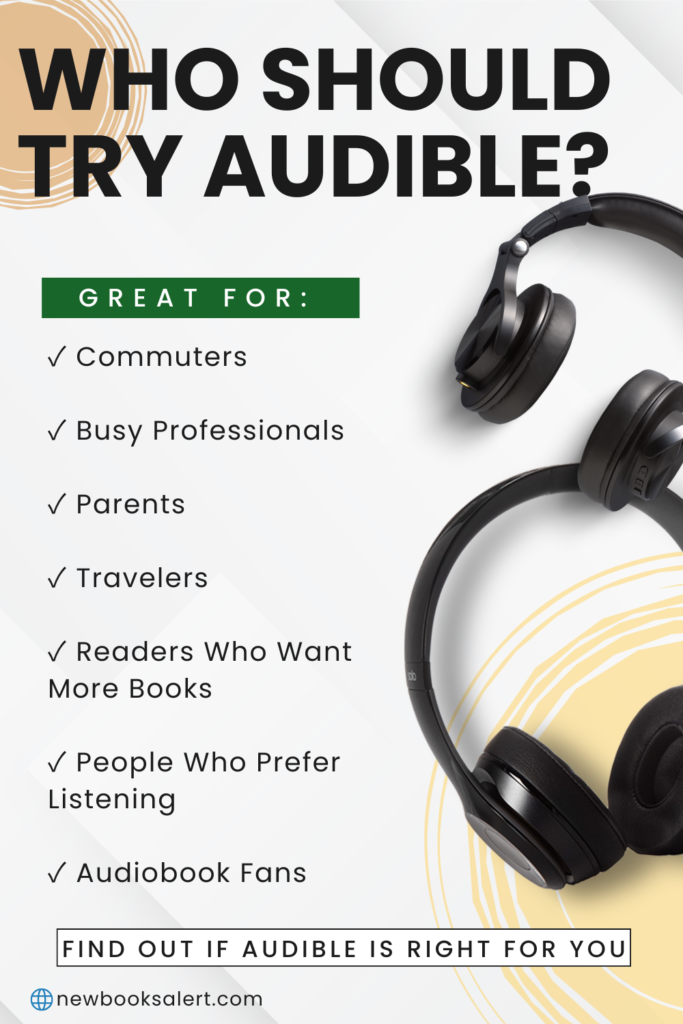
Who Audible Is Best For
Audible isn’t for everyone. However, for certain types of readers, it can provide exceptional value.
Commuters
If you spend time commuting each day, audiobooks can transform that time into an opportunity to enjoy books.
Even a 30-minute commute each way can add up to hundreds of listening hours over the course of a year.
Busy Professionals
Many professionals struggle to find dedicated reading time after work.
Audiobooks make it possible to enjoy books during travel, exercise, meal preparation, or household tasks.
Parents
Parents often find that audiobooks help them stay connected to reading despite busy schedules.
Travelers
Whether you’re flying, driving, or taking public transportation, offline listening makes Audible particularly convenient.
Readers Trying to Read More Books
One of the most common reasons people subscribe to Audible is simple:
They want to finish more books.
Because audiobooks fit into parts of the day when traditional reading isn’t practical, many listeners dramatically increase the number of books they complete each year.
Readers Who Read Better By Listening
For many people, listening to books is significantly easier than reading visually.
One reason is that audiobooks remove the need to focus on decoding written text, allowing listeners to absorb stories and information in a different way. This can be particularly helpful for individuals who find extended periods of visual reading tiring or challenging.
Audiobooks also make it easier to fit books into a busy lifestyle. Instead of setting aside dedicated reading time, listeners can enjoy books while walking, exercising, commuting, or completing everyday tasks.
Many audiobook fans also find that adjusting playback speed helps them stay engaged. Some listeners prefer a slightly faster narration pace, which can improve concentration and make it easier to maintain focus throughout longer books.
Ultimately, Audible can help make reading more accessible and convenient for a wide range of people and lifestyles.
🎧 Ready to Try Audible?
A free trial can be a great way to see whether audiobook listening fits naturally into your daily routine.
Who Should Probably Skip Audible?
This is where we have to mention a caveat about Audible.
While Audible can be an excellent service, it won’t be the best choice for everyone.
You may want to think twice about subscribing if:
* You only finish one or two books per year.
* You strongly prefer physical books.
* You rarely listen to audio content.
* You already get everything you need through free library audiobook services.
* You struggle to focus when listening rather than reading.
For these readers, the value proposition may not be as strong.
And that’s perfectly okay.
The best reading format is ultimately the one you’ll actually use.
Audible Pros
Convenience
Perhaps Audible’s biggest advantage is convenience.
You can continue enjoying books during activities that wouldn’t normally allow for reading.
Huge Selection
Audible remains one of the largest audiobook marketplaces available.
Professional Narration
A talented narrator can bring a story to life in ways that differ from traditional reading.
Offline Listening
Perfect for travel, commuting, and situations where internet access may be limited.
Flexibility
You can switch between books, adjust playback speed, and listen whenever it suits your schedule.
Free Trial Available
One of Audible’s biggest advantages for new users is the ability to try the service before committing to a paid membership.
A free trial allows you to explore the Audible app, experience audiobook listening for yourself, and determine whether audiobooks fit naturally into your routine.
Because listening preferences vary from person to person, many readers find that the best way to decide whether Audible is worth it is simply to try it and see how often they use it.
Audible Cons
Ongoing Cost
Some readers may not listen frequently enough to justify a subscription.
Not Every Book Is Included
Depending on the title, additional purchases or credits may be required.
Listening Isn’t Reading for Everyone
Some people simply absorb information better through traditional reading.
Potential Distractions
Audiobooks can sometimes become background noise if you’re multitasking too heavily.
Is Audible Worth It?
For many readers, yes.
If you regularly enjoy books, commute frequently, travel often, or want to increase the number of books you finish each year, Audible can be one of the easiest ways to consume more content.
However, the best way to determine whether Audible is worth it for you is to try it yourself and see how naturally it fits into your routine.
For many book lovers, the convenience alone makes it worthwhile.
Audible vs Reading Physical Books
One of the most common questions readers ask is whether listening to audiobooks provides the same experience as reading a physical book.
The reality is that both formats have strengths.
Physical books offer a focused, distraction-free experience that many readers love. Sitting down with a book allows you to read at your own pace, reread passages, and immerse yourself in a story without competing demands for your attention.
Audiobooks, however, provide flexibility that physical books simply cannot match.
With Audible, you can listen while:
- Commuting
- Walking
- Working
- Exercising
- Cooking
- Cleaning
- Traveling
- Sleeping
For many people, audiobooks don’t replace reading, they complement it.
A growing number of readers use a combination of physical books, eBooks, and audiobooks depending on the situation.
Rather than asking which format is better, it may be more useful to ask which format helps you enjoy more books.
Audible vs Kindle Unlimited
Audible and Kindle Unlimited are often compared, but they serve different purposes.
Kindle Unlimited focuses primarily on eBooks, giving subscribers access to a large library of digital books.
Audible focuses on audiobooks and audio content.
If you enjoy sitting down and reading, Kindle Unlimited may be the better fit.
If you spend a lot of time commuting, exercising, or multitasking, Audible may provide greater value.
Many dedicated readers subscribe to both services and use them for different situations.
For example:
- Reading an eBook at home
- Listening to an audiobook while driving
- Switching between formats depending on available time
Neither service is universally better. The best choice depends on how you prefer to consume books.
Audible vs Free Library Audiobook Apps
One of the strongest alternatives to Audible is your local library.
Many libraries offer access to digital audiobook services such as Libby and Hoopla, allowing members to borrow audiobooks for free.
This raises an important question:
Why pay for Audible when free alternatives exist?
The answer depends on what you value most.
Library apps can be fantastic resources, but they often come with limitations such as:
- Waiting lists for popular books
- Limited copies
- Availability restrictions
- Expiring loans
Audible typically offers immediate access to purchased content and a broader commercial catalog.
For readers who regularly listen to audiobooks, many find that the convenience and selection justify the cost.
That said, library services remain an excellent supplement to Audible and can help readers discover new books at no additional cost.
Is Audible Worth It for Fiction Readers?
For fiction fans, Audible can be particularly appealing.
Many novels benefit from professional narration that adds personality, emotion, and atmosphere to the story.
Popular fiction categories on Audible include:
- Romance
- Fantasy
- Science Fiction
- Mystery
- Thriller
- Historical Fiction
Long-running series are especially well suited to audiobook listening.
Many readers find that they can work through large fantasy or mystery series more quickly by listening during commutes, walks, and daily routines.
If you regularly follow authors and new book releases, Audible can make it easier to keep up with your reading list.
Looking for your next audiobook? Explore our latest author release schedules and upcoming book guides.
Is Audible Worth It for Nonfiction Readers?
Audible is equally valuable for many nonfiction readers.
Categories that often work particularly well in audio include:
- Biographies
- Memoirs
- History
- Business
- Self-development
- Science
- Personal finance
Some listeners even prefer nonfiction in audio form because it allows them to absorb ideas while exercising, commuting, or completing routine tasks.
Many biographies and memoirs are narrated by the authors themselves, which can create a more personal experience than reading the printed version.
If your goal is to learn while making use of otherwise idle time, Audible can be an effective tool.
Audible Membership Options Explained
Audible offers several membership options designed for different listening habits.
Some plans are ideal for occasional listeners, while others are aimed at readers who consume multiple audiobooks throughout the year.
When evaluating Audible memberships, ask yourself:
- How many books do I typically finish each month?
- How often do I listen to audio content?
- Am I looking for occasional entertainment or a long-term reading habit?
For casual listeners, a free trial is often the best place to start.
For committed audiobook fans, an annual membership may provide better overall value.
🎧 Audible Free Trial
New to audiobooks?
Start with an Audible free trial and see whether audiobook listening fits naturally into your lifestyle.
Try Audible (New Member Deals Available)
🎧 Audible Premium Plus Annual Membership
Already know you enjoy audiobooks?
An annual membership may be worth considering for readers who listen regularly throughout the year.
Save with an Audible Annual Membership
How Many Books Do You Need to Listen to for Audible to Be Worth It?
This is perhaps the most important question of all.
There isn’t a universal answer because every reader has different habits.
However, many Audible subscribers find value if they:
- Listen during daily commutes
- Regularly exercise with audiobooks
- Finish at least one book per month
- Enjoy discovering new authors and series
The more consistently you listen, the easier it becomes to justify the membership.
For frequent listeners, Audible often becomes part of their everyday routine rather than an occasional service.
Signs Audible Is Probably Worth It for You
✓ You regularly finish books.
✓ You commute frequently.
✓ You travel often.
✓ You enjoy podcasts or audio content.
✓ You struggle to find time to sit down and read.
✓ You want to increase the number of books you consume each year.
✓ You enjoy discovering new authors.
Signs Audible May Not Be Worth It
✗ You rarely finish books.
✗ You strongly prefer physical reading.
✗ You already meet all your reading needs through free library services.
✗ You find it difficult to concentrate on spoken content.
✗ You only listen to audiobooks occasionally.
Frequently Asked Questions About Audible
Can I Keep Audible Books if I Cancel My Membership?
In most cases, audiobooks you’ve purchased or redeemed with credits remain in your library even if you cancel your membership.
However, membership benefits and access to included content may change depending on your plan and Audible’s current terms.
Does Audible Require Amazon Prime?
No.
You do not need an Amazon Prime membership to use Audible.
The two services are separate, although both are owned by Amazon.
Can I Listen to Audible Offline?
Yes.
One of Audible’s most useful features is offline listening. You can download audiobooks to your device and listen without an internet connection.
This is particularly useful for travel, flights, commuting, and areas with limited connectivity.
Can I Listen on Multiple Devices?
Yes.
Audible supports listening across smartphones, tablets, computers, and other compatible devices.
Your listening progress typically syncs between devices, allowing you to pick up where you left off.
Is Audible Better Than Reading?
Neither format is universally better.
Some readers prefer the focus and immersion of physical books, while others appreciate the convenience of audiobooks.
Many avid readers use both depending on the situation.
Is Audible Good for Long Book Series?
Absolutely.
Many fantasy, mystery, thriller, romance, and science fiction readers use Audible to work through lengthy series more efficiently.
Audiobooks can make large reading projects feel more manageable.
Is Audible Worth It for Casual Readers?
It depends.
If you only finish a few books each year, a subscription may provide less value.
However, some casual readers find that audiobooks help them consume more books than they otherwise would.
What Genres Are Most Popular Audible?
Popular genres include:
- Romance
- Fantasy
- Mystery
- Thriller
- Science Fiction
- Historical Fiction
- Biography
- Memoir
- History
- Business
- Self-Development
- Finance
The best genre is ultimately the one you enjoy listening to.
Can Audible Help Me Read More Books?
For many people, yes.
One of the biggest reasons readers subscribe to Audible is that audiobooks create additional opportunities to enjoy books throughout the day.
Activities that normally wouldn’t allow for reading suddenly become opportunities to continue a book.
Is Audible Worth It in 2026?
For many readers, yes.
If you regularly listen to audio content, commute, travel, exercise, or simply want to fit more books into your life, Audible remains one of the strongest audiobook platforms available.
Looking for a Gift for a Book Lover?
Finding the perfect gift for a reader can be surprisingly difficult.
Many book lovers already own the books they want, and choosing a title for someone else isn’t always easy.
An Audible gift membership offers a flexible alternative.
Instead of selecting a specific book, you’re giving access to audiobooks and audio content that the recipient can enjoy based on their own interests.
Whether they’re fans of thrillers, fantasy, romance, biographies, or nonfiction, an Audible gift allows them to choose what they want to listen to.
🎁 Give the Gift of Audible
A thoughtful option for birthdays, holidays, graduations, and special occasions.
Final Verdict: Is Audible Worth It in 2026?
For most regular readers, Audible is absolutely worth considering.
The biggest advantage isn’t necessarily the size of the audiobook catalog or the membership benefits, it’s the ability to turn otherwise unused time into reading time.
A daily commute becomes an opportunity to enjoy a novel.
A walk becomes a chance to learn something new.
A long journey becomes time spent immersed in a story.
That convenience is what makes Audible so valuable for many listeners.
At the same time, it’s important to recognize that Audible isn’t the perfect solution for everyone.
Readers who strongly prefer physical books or rarely finish audiobooks may find less value in a membership.
The good news is that there’s a simple way to find out.
Should You Try Audible?
✓ Audible is likely worth trying if:
- You enjoy books.
- You want to read more each year.
- You commute regularly.
- You travel frequently.
- You enjoy podcasts or audio content.
- You struggle to find dedicated reading time.
✗ You may want to skip Audible if:
- You rarely finish books.
- You strongly prefer reading over listening.
- Free library services already meet your needs.
- You don’t enjoy audio content.
🎧 Try Audible Free
The easiest way to decide whether Audible is worth it is to experience it for yourself.
Audible won’t be the right fit for every reader, but for many people it provides a convenient way to enjoy more books throughout the year.
Continue Exploring Books & Authors
If you’re looking for your next great read, be sure to explore:
- Browse our latest book release guides.
- Discover upcoming book release calendars.
- Find new and upcoming books by your favorite authors.